
The Nottingham Hidden History Team
Updated: May 14
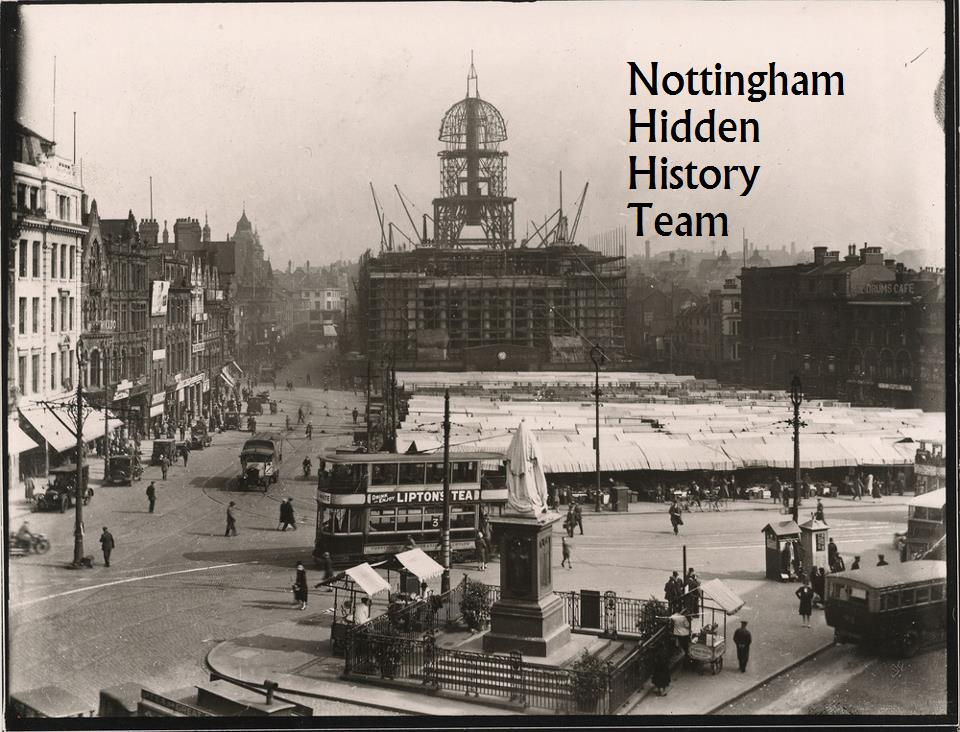
by Joseph Earp
Nottingham
15th May 2026
“Eh Up Me Duck”, as they say in Nottingham. If you don't know me my name is Joe Earp and I run the Nottingham Hidden History Team. You may have seen us around somewhere! For those who don't know who we are let me explain a little more about our history.
The original Nottingham Hidden History Team were formed in 1965. The purpose of the Team was to try to save or at least record before destruction the cave sites continually discovered during the major redevelopment of the City in the 1960s and onwards. Almost every day new sites were unearthed and destroyed before anyone was officially notified; the last thing contractors wanted was someone telling them to stop work on a project; TIME is MONEY.
During this period the ‘Team‘ – about ten strong (varying on availability of members at any particular time) - recorded, cleaned and helped preserve many sites that would have
been lost for ever. The team’s founder and team leader was Mr Paul Nix.
In the early days, the team found themselves involved with various cave explorations. Readers should remember that it was groups like the Nottingham Hidden History Team and others who were the first to excavate and record the many caves under Nottingham. The team’s cave highlights saw them recording Daniel in the Lion’s Den and the Colonnade in the Park Terrace. They were also one of the first to record the Old Angel Inn, Judge’s Restaurant on Mansfield Road, caves under Long Row, and caves under the old Flying Horse Hotel, plus many more.

Perhaps the highlight of the team’s work was a rescue excavation of the Goose Gate caves. In 1979 shops along Goose Gate were demolished. Whilst the land was being levelled, it was decided to excavate the site before further development. On Thursday the 30th January 1979, while scraping a section around twenty yards in from Goose Gate, a large hole was found containing an opening into a cave system. Paul Nix was called in to excavate and record the caves. Through the team’s research, it was discovered that the cave system was Nottingham’s first brewery which was called Simpson’s, on land leased from Richard Arkwright. It was also discovered that part of the system was an underground slaughterhouse used by a pork butcher’s shop, which over several years had subsequently various uses. By the end of the team’s dig, the Council’s Department of Technical Services decided to save the caves and preserve them.
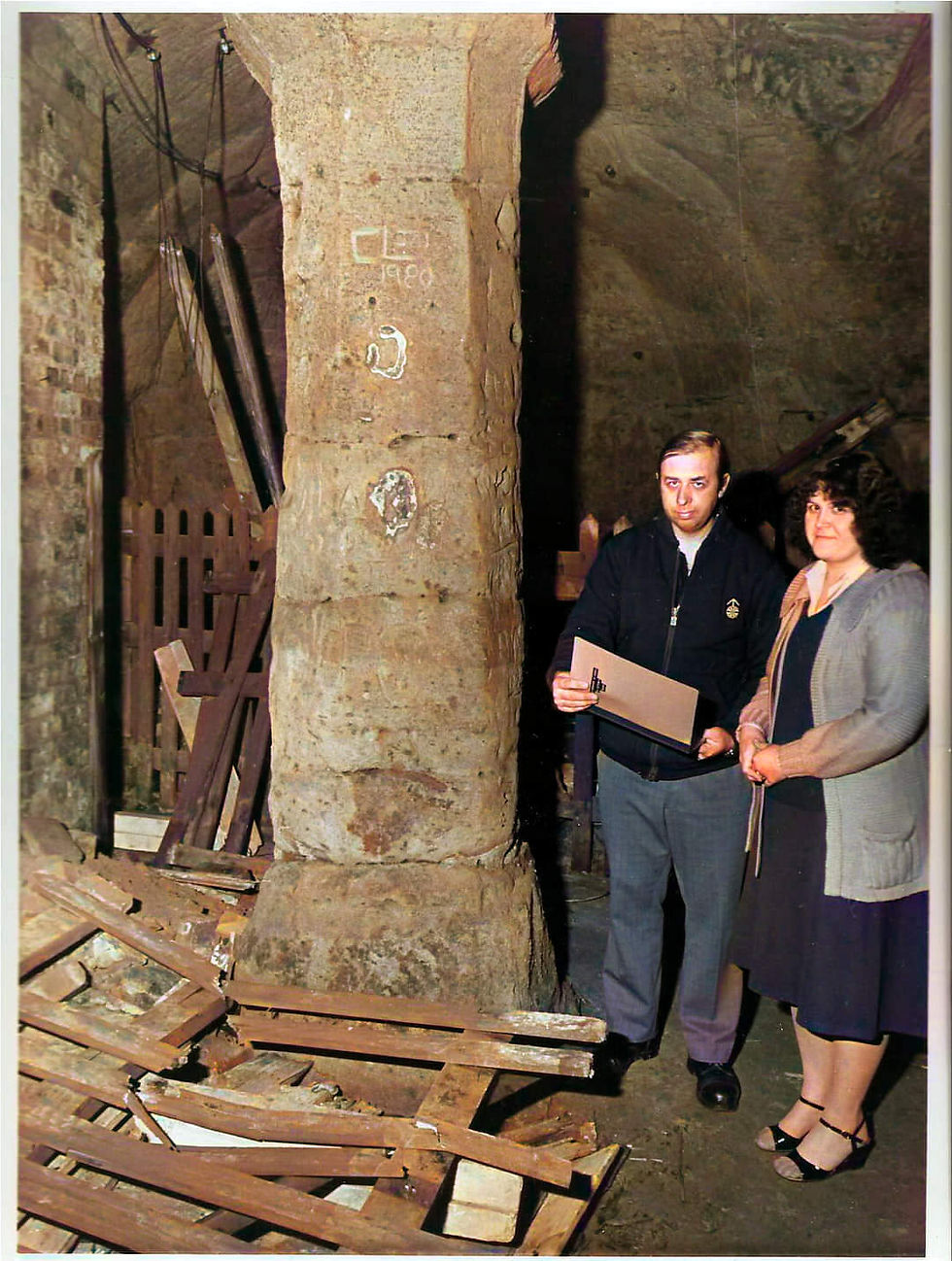
In 1982 the Team was officially recognised by the City of Nottingham’s Arts Department with Paul Nix as its Team Leader. It was officially agreed that the Team would record various aspects of Nottingham History, including features and functions of old buildings, as well as recording and photographing old caves, related cellars and underground features. It was also agreed that the Team would work in collaboration with the City’s Museums and advise on any possible archaeological investigations.

Nottingham Hidden History Team being ‘officially’ recognised by City of Nottingham’s Arts Department
By the late 1980’s the Team working collectively, involved Paul Nix, Robert Morrell and Syd Henley. The Team researched and worked on Nottingham’s local history, folklore and archaeology. Nix, Morrell and Henley would go all over Nottinghamshire recording what they discovered as well as photographing everything . The team published a quarterly magazine on their research, plus various Nottingham local history booklets which were published through Robert Morrell’s publishers ‘APRA Press’. The team’s major works included published material on the Hemlock Stone at Stapleford, material on Nottinghamshire’s Holy Wells and Springs, Nottinghamshire Mazes and of course Nottingham cave publications.
The team with the leadership of Paul Nix also started a quarterly magazine ‘Mercian Mysteries’, in collaboration with well established and respected publisher and writer Bob Trubshaw. Trubshaw remembers their days together “I would help Paul put together each issue of Mercian Mysteries. A vast amount of Computer equipment was squeezed into his bedroom. I would sit on his bed, surrounded by relevant paperwork, while he beavered away on the keyboard. Hours would go by and I would return home nearer to midnight. The following Saturday I would collect him and the artwork for the magazine, we would drive to Trinity Square and then spend ages in a stationery shop photocopying about a hundred copies of each issue before going back to Cromer Road to put them in envelopes and add stamps. Eventually I would drop them off at the PO sorting office on the corner of Huntingdon Street on my way back home”.
Later in Paul’s life he met Peter Woodward, while researching a village near where Peter lived in 2002. After their first meeting the pair spent many hours, days and nights together, with Paul teaching Peter about manipulating images and Web Pages. Their days together would be spent with Paul teaching Peter how to build a web page which developed into a vast site called ‘My Broxtowe Hundred’. Paul had helped many people over the years with their websites and would answer people's many questions relating to Nottingham or Nottinghamshire. Paul Nix was one of the first people to set a website up on Nottingham Local History.
The pair worked together on their two websites as well as collecting and writing material. Perhaps the highlight in their research was work on Huntington Beaumont’s first railway line at Wollaton and their extensive work on Nottinghamshire villages. The team lapsed for a few years after the death of Paul Nix in 2008. Luckily Bob Trubshaw and Frank Earp managed to save some of the Hidden History Team’s vast collection of photographs, postcards, slides and research. The result of the recovery and preservation of the collection made me decide to reform the team back in 2011.
Since 2011 we have been very busy. We have written almost 10 books between us. The most popular of our books being Secret Nottingham, Secret Beeston, Nottingham From Old Photographs and the latest Lost Nottingham (2025). The Team has worked on many projects, events and talks. We have also contributed to many newspapers, magazines, TV and radio shows. We have an amazing archive of photographs and material on old Nottinghamshire. Over the last few years I have been slowly sorting through this material. A lot of our stuff can be found on our site (links below) and in our books. The Nottingham Hidden History site continues to be a digital archive of our research and work.
Sadly in June 2025 my Father, Frank Edmund Earp, passed away. His death has left a profound sense of sadness and loss in the field of Nottingham History and Folklore. Throughout a remarkable career, he made significant contributions to the Nottinghamshire History scene. Frank Earp had over fifty years experience of working in history, folklore and earth mysteries. Frank was born in Half Way House in Wollaton, Nottingham. The Half Way House was an old farm house possibly dating back to the 1500s and 1600s and was part of the old estate belonging to the Willoughby’s of Wollaton Hall. The house had a lot of history and this inspired him to take up his life long passion for Nottinghamshire’s folklore and history.

Frank had a wealth of experience in his area of expertise. His past had seen him write and publish a series of books, some of which include: May Day in Nottinghamshire, The Catstones of Catstone Hill, A Guide To The Druid Temple In The Church Cemetery and John Darrell: A Nottinghamshire Exorcist. In recent years he had written The A-Z of Curious Nottinghamshire for The History Press. He has also co-authored two books with me for Amberley Publishing. These two books are the very popular book Secret Nottingham and Secret Beeston.

Frank had also written past articles for the Nottingham Post, Northern Earth Mysteries, At The Edge and Mercian Mysteries. Frank regularly conducted and led guided walks and talks around Nottinghamshire on a number of topics. For over ten years Frank wrote his highly successful Nottinghamshire History column for The Topper Newspaper.
The death of my father is not the end of our work. We are going to continue to publish his work and the work of Paul Nix and the original Nottingham Hidden History Team. I also continue to research, write about, document and photograph Nottingham and Nottinghamshire's history. My published books currently include: Nottingham From Old Photographs, Secret Nottingham, Victorian and Edwardian Nottingham Through Time, Secret Beeston and the latest Lost Nottingham.
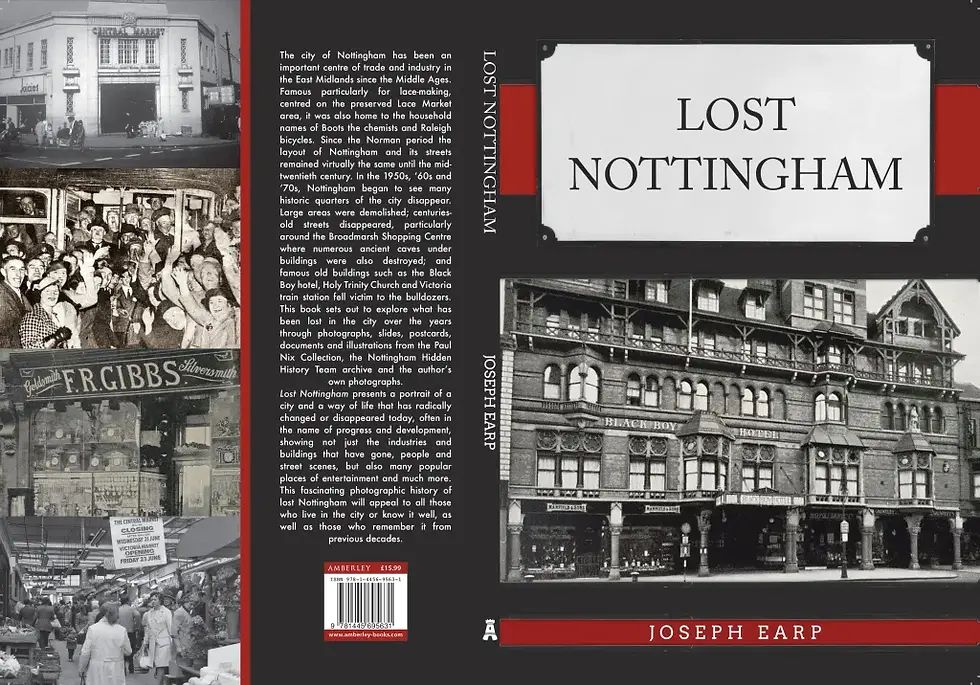
Lost Nottingham Published in 2025 by Amberley Publishing.
My own research, work and photographs are now starting to become an archive within itself. I currently have over 15,000 of my own photographs of Nottinghamshire, where I have photographed and recorded the changing face of the city and county. I have a lot of projects, articles and books in the pipeline connected with Nottingham and the county's history and folklore. I will continue to add to the Nottingham Hidden History page. There is plenty to keep me busy. Please visit our Nottingham Hidden History site and perhaps take a look at some of our books.
Joseph Earp
Links:
Nottingham Hidden History Team Website:
Nottingham Hidden History Team on Facebook
Nottingham Hidden History Team on YouTube:
This NHHT article was originally published on 11 March 2026, to give our 'readers' a 'heads up' of who we are, where we have come from and what future plans we have in terms of books, projects, etc.
Re-published by Marysia Zipser, Founder & ACT Ambassador, Beeston, Nottingham. https://www.artculturetourism.co.uk/ https://www.artculturetourism.co.uk/blog
All our stories since 2017 are here https://www.artculturetourism.co.uk/blog so please dip into them anytime.
Please feel free to write your feedback, remarks/reactions to Joseph in the Comments box below, to which he will respond, and to share/forward this article/blog link via email to friends, colleagues and to socials as you wish. Thank you.
A fascinating read. Thank you for publishing this Marysia.